Sunday, 10 April 2011

Frederick R. Weisman Art Museum

Frank Gehry Weisman Art Museum is a four-story structure housing approximately 11,000 square feet of gallery space. A precursor to the architect more famous Disney Hall and Guggenheim Bilbao, the Weisman is made of brushed stainless steel and terra-cotta colored brick. The building, on the campus of University of Minnesota, is dramatically sited on a bluff overlooking the Mississippi River.
Frederick R. Weisman Art Museum
The most stunning views of the building are from the pedestrian and highway decks of the adjacent bridge. Some locals critical of the radical architectural style frequently point out that the building’s design could unexpectedly reflect the light of the sun into the eyes of motorists on the bridge. An urban legend told on campus claims that one such blinded motorist drove off of the bridge and fell into the Mississippi River below. Studies commissioned by MNDOT have found that the museum is not hazardous to motorists.
Frederick R. Weisman Art Museum.
Frederick R. Weisman Art Museum,

Texas travel guide

Texas is big and bold. Also known as the Lone Star State, Texas is famous for vast cattle ranches and oil booms, with its natural wonders inspiring travelers from all over the world. Hike scenic canyons and dense forests, explore mysterious caverns or relax on undisturbed beaches. Texas is a great year-round vacation destination with sunny days and moderate temperatures during long spring and fall seasons.

The Panhandle Plains in the north-western corner of Texas feature a rugged and flat landscape that changes to reveal dramatic canyons including the stunning Palo Duro Canyon.
The beautiful Big Bend Country is the most remote part of the state. One of America’s largest national park attractions, Big Bend National Park stretches from the Rio Grande River to the Chisos Mountains, encompassing massive canyons, rock formations and a vast desert.

The Texas Hill Country features rolling countryside and a strong European heritage with settlers from the UK, Germany and central Europe. Many of the state’s dude or guest ranches are located here. The State Capital, Austin, is known for its live music and relaxed atmosphere.

The South Texas Plains expand from San Antonio to the Rio Grande River, offering diverse scenery for birdwatchers, bargain hunters, and history enthusiasts touring The Alamo and other historical sites.

The Texas Gulf Coast is protected by barrier islands stretching from Galveston to South Padre Island. Visitors can wander along the Great Texas Coastal Birding Trail, which offers 308 individual birding sites. Houston, nicknamed Space City, is the fourth largest city in the US and is home to NASA Johnson Space Centre.
Texas Travel Guide
The Prairies and Lakes Region is dominated by the Dallas/Fort Worth Metroplex. Dallas is a sophisticated city with bustling restaurants and shops. Fort Worth has a strong western heritage displayed in the Fort Worth National Historic Stockyards.

The Piney Woods of East Texas offers a landscape filled with forests and streams, lush meadows and quaint historic towns. The region’s four national forests draw visitors for their beauty, peace and outdoor recreation.
Texas Travel Guide

Sucre City – The second capital of Bolivia

Sucre is the constitutional capital of Bolivia. The city of Sucre is also known as the City of Four Names, being those names La Plata, Charcas, Ciudad Blanca (White City), and Sucre. Founded as Chuquisaca in 1538, the city received its present name in 1840, in honor of the first Bolivian president, Antonio Jose de Sucre. In 1809 Sucre became one of the first cities in South America to revolt against Spanish rule. On December 13, 1991 UNESCO declared the Historic City of Sucre a “World Heritage Site” in recognition of its rich history and its wealth of colonial architecture. The city attracts thousands of tourists every year thanks to its well-conserved downtown with buildings from the 18th and 19th century. Its many well-preserved 16th-century religious buildings illustrate the blending of local architectural traditions with styles imported from Europe. Population is 247,300 in 2006.
Sucre  City – The second capital of Bolivia
Sucre is the gateway to numerous small villages that date from the colonial era. The most well-known of which is Tarabuco – home of the colourful “Pujllay” festival held each March. In these outlying villages, one is as likely to find a descendant of the Spanish conquest as members of an indigenous group that still dress in their unique native clothing they use not only to preserve their cultural identity but also to let others instantly know what town or region they are from.
Sucre  City – The second capital of Bolivia.
Sucre shares capital city status with La Paz, the legislative and administrative capital. Sucre is also a university city, with many cultural attractions, museums, shops, restaurants. San Francisco Xavier university was founded in 1625, one of the oldest universities in the Americas, and specializes in law. Relatively small, Sucre is an easily walkable city and the older sections, with the white colonial buildings with their distinctive red-tiled roofs and distinctive balconies offer nooks and crannies to explore.
The sights of the town are: Casa de la livertad – House located on the main plaza, where the declaration of independence of Bolivia was signed on august 6th, 1825. Portraits of presidents, military decorations, and documents are displayed. Palacio de la Glorieta- Formerly an outstanding palace owned by the wealthy entrepreneur Don Francisco de Argandoña, it now serves as a military school. Museo de la Recoleta – established by the Franciscan Order in the early 16th century. This placed served as a convent, barracks, prison, and museum. Displays anonymous paintings from the 16th to 20th centuries.

Zermatt- one of the most prestigions resorts of the earth

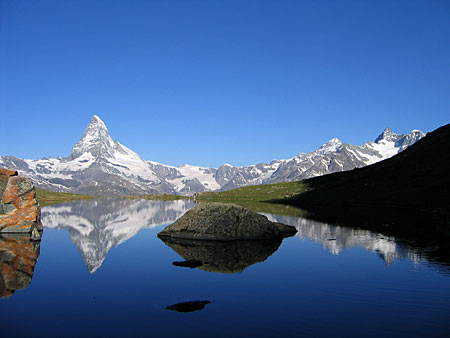
The mountain village of Zermatt is one of the great ski and climbing centres of the world. Nestled in a deep valley enclosed between steeply scarped mountains, it is dominated by the huge and gracefully curved pyramid of the Matterhorn. Despite Zermatt’s popularity, despite it’s growth – more than 13000 visitors’ beds – it is still only a village, open and friendly, where people mix happily in the main street, mercifully free of cars, and dance the night away in the many rendezvous at hand. There are bars, restaurants and night-spots to suit every taste and pocket.
Zermatt- one of the most prestigions resorts of the earth
The small area around Zermatt features 36 mountains over 4000m, a statistic as enticing to summer hikers as to winter skiers. The first hotel opened in 1838. All through the nineteenth century, word of the place spread, and the local community quickly saw the potential: grand hotels went up and public funds were diverted into construction of the Gornergrat rack railway at the turn of the century. The skiing boom of the 1960s saw the hamlet double in size, but today it’s still acceptably small and low-key, rooted to the valley floor in a natural bowl open to the south. Zemrat is a resort located in Swiss Alps. It is most luxury point for tourists, skiing-sports and rock climbers. The humans that love extreme pleasures, harmonized with the appropriate setting, are always good they had come here. It is full despite this as well in the entire year. The close hotels of 4 levels make you feel extra. The apartments are beautiful and expansive, are appointed so can satisfy as well the most erratic tourist.An unforgettable play of colours and the unique panorama from the Rothorn Paradise combine to make this sunrise excursion an unforgettable experience. The eternal ice glows pink and the Matterhorn slowly comes to life with the first rays of sunlight. After the spectacular sunrise, visitors recharge their batteries with a hearty buffet breakfast at the Rothorn Restaurant.
Zermatt- one of the most prestigions resorts of the earth
The world’s highest glacier palace, approximately 15 metres under the surface of the glacier, and the various glacial splits and gaps, can all be explored in amazement. Discrete lighting and spherical sounds accompany this small wonder of the glacial world. Information about the creation of the palace, glaciology and wine, and the fascinating sculpture skilfully honed from the ice all add up to a very special experience.

Great temptation is the downhill in 10 kilometer, the road Ventina, for skiing or snowboard of which. But this that attracts much tourists is Matterhorn. Matterhorn- This is the most known reef in Alps , his stature is 4 478m. It is located on the limit between Switzerland and Italy, it is cleared of 14 July 1865, from group of crags men ahead for the first time for Eduard Wimper. The group has been from 7 humans, but 4 of them find the death at the declining. In their laureateship, at the point a large metallic cross is raised today. To Matterhorn there are everlasting snows and ices. A lot is known with its pyramidal form that is commented well by Zermatt as well. Matterhorn is real challenge. The particularly steep north 1100m, avalanches sag in her endlessly. But Jan-Mark Boavan has successfully overcome reef with ski (1980). Two Bulgarian crags mens in 1974 as well have cleared it. Each year the Swiss army staged international race.
Zermatt- one of the most prestigions resorts of the earth - 2
Zermatt it will go in your consciousness always as a character of the rocky mountainous beauty. Zermatt is an experience in itself: this one little village which has managed, much to its credit, to cling on to its old brown chalets and atmospheric twisting alleys  welcomes everybody, regardless of financial status, and the station square is where all worlds collide.

The Unique Solomon Islands

The Solomon Islands is a double chain of islands located 1860 kilometres to the north east of Australia. Shaped by earthquakes and volcanic activity thousands of years ago, the 922 individual islands, of which 350 are uninhabited, are divided into nine provinces.

The six main islands of Choiseul, Santa Isabel, Guadalcanal, Malatia, Makira and New Georgia make up most of the 28,000 square kilometre land mass. Hundreds of smaller islands and atolls are scattered throughout the group.
The Unique Solomon Islands -1
The Solomon Islands are a uniquely, beautiful environment, wild and untamed. The landscape is mountainous with 80% of the islands covered in dense rainforest.

Located along the Pacific Ring of Fire, there are several active volcanoes and numerous uplifted atolls and coral islands.

The nation is largely untouched by tourism. Most of the population live in small villages and follow traditional cultures and lifestyles with hunting, fishing, carvings, handcrafts and subsistence farming being their main activities. The Solomon Islanders are a friendly, warm and generous people who make visitors to their Islands feel most welcome.
The Unique Solomon Islands - 2
During World War II the Solomons became the key turning point in the desperate struggle by the allied forces to repel the Japanese advancement in the South Pacific. Most of the heavy fighting was concentrated in the Guadalcanal area with one of the fiercest encounters in naval history taking place on 13th November 1942. The “Battle of Guadalcanal” extracted heavy losses on both sides. Hundreds of ships and aircraft litter the ocean floor, providing divers with a wide range of wrecks to explore. The machines and relics of destruction now form spectacular, artificial reefs that attract masses of fish and an incredible variety of coral life.

Dive in! 10 best underwater experiences.

Would you like to be under the sea? Even if diving with sharks isn’t your thing, there are underwater cocktails bars. Go ahead, dive in!

1. Diving with great whites, Gansbaai, South Africa

Everyone knows how the Jaws theme music goes. Diving with great white sharks is up there with base-jumping in the adrenaline top 10, and Gansbaai in the Southern Cape is the ideal place to swim with the big fish. Fortunately, there’s an aluminium cage – or for the brave, a clear plastic tube – between you and the ocean’s greatest killing machines. Numerous companies offer dives in Gansbaai’s ‘Shark Alley’, but look for operators who invest their profits back into shark conservation. The Shark Lady, aka Kim Maclean, pioneered shark diving at Gansbaai; peak shark season runs from May to October.
Gansbaai, South Africa

2. Getting married underwater in Trang, Thailand

If you fancy making a splash on your wedding day, consider an underwater wedding at Trang in southern Thailand. Every Valentine’s Day, dozens of couples don scuba tanks and descend to an altar 12m beneath the Andaman Sea for a full Thai wedding ceremony. Wedding dresses are de rigueur and even the marriage certificate is signed underwater; the ceremony ends with the happy couple releasing one million baby shrimps and a giant clam onto the reef to gain Buddhist merit. Of course, it’s tricky saying ‘I do’ with a regulator in your mouth…

The Trang Underwater Wedding Ceremony runs from 12 to 14 February every year, and brides and grooms must be certified open-water divers.
Trang, Thailand
3. Sleeping with the fishes in Fiji

Travellers with plenty of cowrie shells to spare can swap a night under the stars for a night with the starfish at the sparkling new Poseidon Undersea Resort in the Fiji islands. Suites are housed in futuristic pods on the sea bed, covered by acrylic domes and linked to the surface by a high-speed elevator. There’s even a private submarine that guests can pilot around the lagoon. It’s all very James Bond, and the prices would make a supervillain wince.

There’s a long waiting list for rooms at Poseidon Undersea Resort. If you have to ask the cost, you probably can’t afford it.
fiji
4. The ultimate fish supper in the Maldives

Taking the heights of luxury to the depths of the ocean, the Conrad Rangali Maldives resort offers every imaginable indulgence, including an eatery at the bottom of the briny. Covered by a curving glass canopy, the Ithaa restaurant floats beneath a curtain of swirling tropical fish, 5m below the surface of the Indian Ocean. Stingrays, groupers and sharks are regular visitors – think of it as an aquarium where the fish get to watch you eat. If you can see past the obvious contradiction, the menu runs to spiced scallops, tuna sashimi and lobster fricassee.

Visit the Conrad Rangali Maldives from December to March for peak underwater visibility.
Maldives
5. Swimming to your room in the Florida Keys

The only hotel in the world where you have to scuba dive to reception, Jules’Undersea Lodge is housed inside a converted marine laboratory off the coast of Key Largo. Just six people fit inside this futuristic space, which opens directly onto the sea bed through a pressure-balanced wet room. The compact quarters might deter the claustrophobic, but the sea-lab setting is very James Cameron’s The Abyss. Rates include meals – delivered from the surface in waterproof containers – as well as unlimited tanks for dives in the lagoon.

Advance bookings are essential for the two bedrooms at Jules’ Undersea Lodge, and guests must be certified divers or take a special introductory dive course.
Florida
6. Snorkelling with whale sharks, Ningaloo Reef, Australia

Swimming with sharks feels a lot less scary when the sharks in question don’t eat meat. Whale sharks grow to more than 12m in length – as long as a doubledecker bus – but these gentle giants live off a diet of microscopic plankton. Whale sharks spook easily and the ideal way to get close is with a mask, snorkel and fins, so the best place to swim with the world’s biggest fish is Ningaloo Marine Park on the west coast of Australia. Numerous operators run shark-snorkelling tours from the town of Exmouth in Western Australia.

Whale sharks visit Ningaloo Reef between April and July – at other times, you’ll have to make do with manta rays, turtles, dolphins and humpback whales.
7. Submarine cocktails in Eilat, Israel

According to Jules Verne, Captain Nemo frowned on alcohol and anything else associated with the surface of the earth, but the Red Sea Star would still be his kind of bar. Nestling on the seabed off the coast of Eilat, this wacky watering hole offers the rare opportunity to sip a sea breeze cocktail at the bottom of the sea. Okay, so the decor – wobbly windows, starfish lanterns, jellfish chairs – is as tacky as an octopus’s tentacles, but you can’t fault the views over a coral garden teeming with fish.

Before you jump into your swimming costume, the Red Sea Star is attached to dry land by a 70m pontoon.
8. Wreck diving in Truk Lagoon, Micronesia

The world of wreck diving owes a lot to WWII – whole fleets of warships were sent down to Davy Jones at Coron in the Philippines and in Scapa Flow in Scotland. But nothing compares to wreck diving in the tiny state of Chuuk in Micronesia. The sandy seabed of this coral atoll forms an eerie graveyard for more than 300 Japanese battleships, freighters, submarines and aircraft, sunk in a single devastating American assault in February 1944. However, dive carefully – the wrecks still carry their original cargoes of tanks, ammunition, torpedoes, depth charges and mines.

Continental Micronesia flies from Guam to the tiny airstrip on Weno island four times a week.
9. Freshwater frolics in Lake Malawi

Landlocked Malawi might seem an unlikely destination for a dive trip, but Lake Malawi has hidden depths (ahem). One of the world’s top spots for freshwater diving, this African Great Lake is home to at least 1500 species of tropical fish, but significantly, no crocodiles (for some reason, they stick to the rivers feeding the lake). On the southern lakeshore, Monkey Bay is a prime spot to learn to dive: for one thing, the ‘pool’ training takes place in the warm, current-free waters of the lake.

In the chilled-out traveller centre of Cape Maclear, Gecko Lounge scores highly for its lakeside terrace and boisterous party vibe.
10.  Disappear into a blue hole in Mexico

The polar opposite of open-water diving, sinkhole diving offers the eerie experience of dropping into the dark unknown. Hidden away in the jungles of Yucatán, Tamaulipas and Quintana Roo, Mexico’s cenotes – from the Mayan word for ‘sacred well’ – plunge to dizzying depths. Divers have descended to 282m in the still, silent waters of Zacatón in Tamaulipas without ever reaching the bottom. Leave your fear of confined spaces at the surface – the average blue hole is a tangle of stalactites, stalagmites and winding limestone passages.

Tulum in Quintana Roo is the undisputed capital of cenote diving, but you’ll need special certification for cave diving.

Majestic Grande Hotel

Located in the heart of Bangkok, the Majestic Grande Bangkok combines contemporary decor and state-of-the-art technology with hospitality which is uniquely Thai. The Majestic Grande offers 251 well-equipped guestrooms and warm, friendly service. The business center at the Majestic Grande Bangkok provides all the business amenities one could possibly need. Business travelers will enjoy the features offered at the Rooftop Executive Lounge and on the Executive Floor. With a choice of restaurants, this hotel offers the most delicious Thai, Asian and international cuisine. In addition, guests can also take advantage of ample opportunities for leisure and recreational activities including exercise in the pool and gym and traditional Thai massage for unwinding after a hard day. For your reservation at the Majestic Grande Bangkok, please select the dates of your stay and complete our secure online booking form.
Majestic Grande Hotel


Address: 12 Sukhumvit Soi 2, Sukhumvit, Bangkok, Thailand
Location:   Sukhumvit
Number of rooms: 251

 
Design by Wordpress Theme | Bloggerized by Free Blogger Templates | free samples without surveys